

It’s 9:47 PM. The kids are finally asleep — though your youngest tried to negotiate one more story for a solid twenty minutes. There’s a pile of washing-up in the kitchen. Your partner’s already crashed out on the sofa. You’ve got a work deadline tomorrow and you haven’t started. And somewhere between the school run, that Teams call you took from the car park, and refereeing a Lego dispute, you forgot to eat lunch.
You’re exhausted. Not the kind of tired that a good night’s sleep fixes. The kind that sits in your bones and makes you wonder when everything started feeling so heavy.
If that sounds familiar, you might be dealing with something more than just a rough patch. You might be heading towards — or already deep in — dad burnout.
It’s Not About Doing More
Here’s the thing most productivity advice gets wrong when it comes to dads: it assumes the problem is efficiency. That if you just optimised your calendar a bit better or woke up thirty minutes earlier, everything would click into place.
But dad burnout prevention isn’t about squeezing more out of an already-empty tank. It’s about recognising when the tank is empty in the first place — and having the tools to refill it before you hit the wall.
Research backs this up. A recent study found that 42% of fathers experience parental burnout, characterised by chronic exhaustion, emotional distancing from their children, and a nagging feeling of being ineffective as a parent. There’s even a clinical term gaining traction: depleted dad syndrome. It’s not weakness. It’s what happens when demands outstrip resources for too long.
So let’s talk about what to actually do about it.
How to Recognise the Signs of Dad Burnout
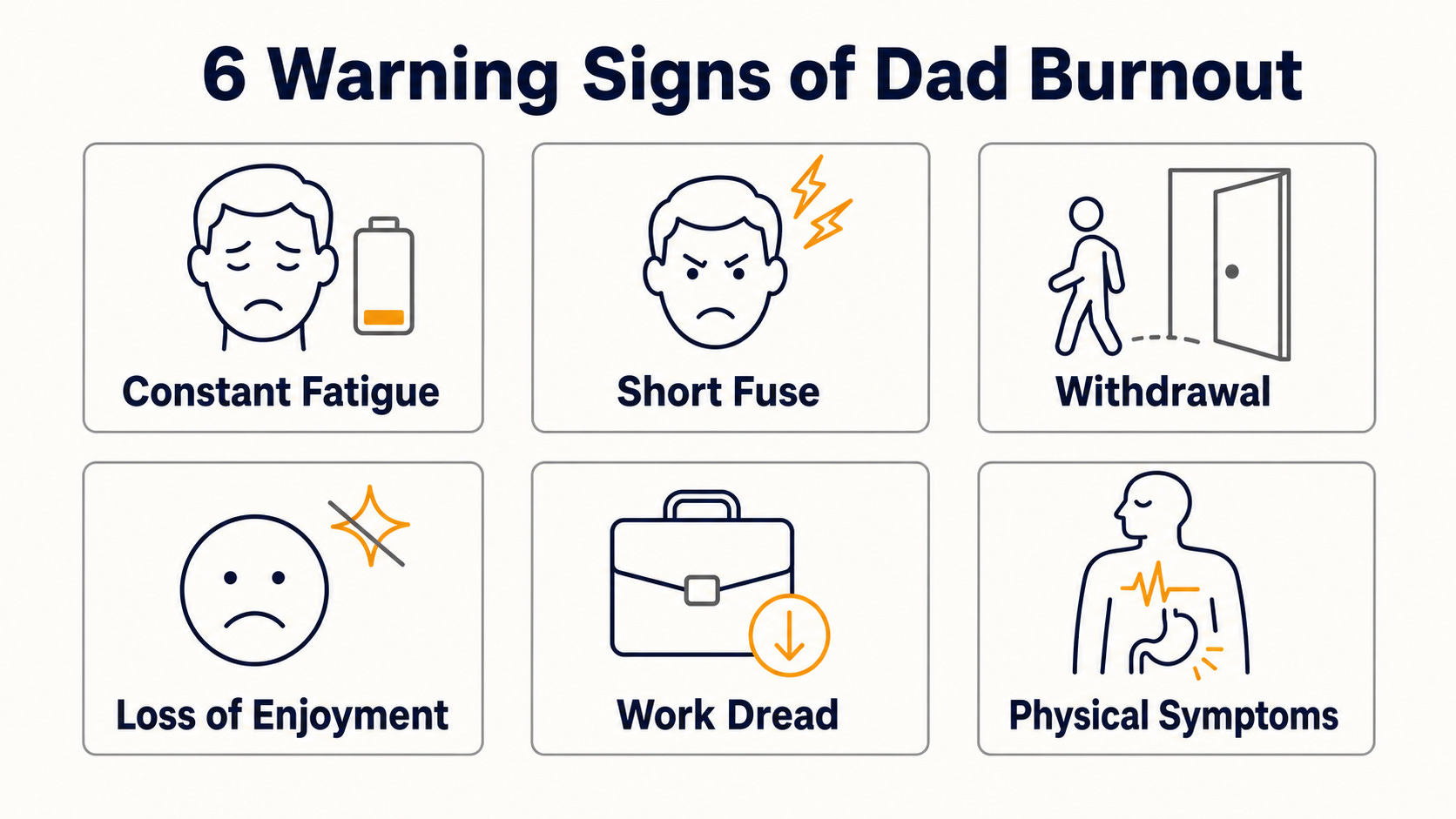
Burnout doesn’t arrive with a big announcement. It creeps in. Here are some signs to watch for:
Constant fatigue — not just physical tiredness, but emotional and mental exhaustion that sleep doesn’t fix.
Short fuse — snapping at your kids or partner over things that wouldn’t normally bother you.
Withdrawal — going through the motions at home but feeling disconnected, like you’re watching yourself from the outside.
Loss of enjoyment — the things you used to love (playing with the kids, your hobbies, even just watching telly) feel like chores.
Work dread — struggling to engage at work, even with tasks you normally find interesting.
Physical symptoms — headaches, poor sleep, getting ill more often.
The key thing to understand: burnout isn’t laziness. It’s your body and mind telling you that something needs to change. And the earlier you notice it, the easier it is to course-correct.
The 30-Minute Daily Recharge
You don’t need a spa weekend or a week off work (though wouldn’t that be nice?). What you do need is 30 minutes a day that belong entirely to you.
That’s it. Thirty minutes. Non-negotiable.
Here’s how to make it happen:
Pick your window. Early morning before the kids wake up, during a lunch break, or after bedtime. It doesn’t matter when — what matters is consistency.
Protect it fiercely. Put it in your calendar. Tell your partner. Treat it like a work meeting you can’t skip.
Do something that genuinely recharges you. This isn’t about being productive — it’s about restoration. Some ideas:
A walk around the block with a podcast
Fifteen minutes of exercise (even a quick bodyweight circuit counts)
Reading a book (an actual book, not your phone)
Sitting quietly with a cup of tea — genuinely just sitting
Playing guitar, sketching, or whatever your thing is
Self-care for dads doesn’t have to be complicated or expensive. It just has to be intentional. The mistake most of us make is waiting until we’re completely spent before doing anything about it. By then, thirty minutes won’t cut it.

Set Boundaries That Actually Stick
One of the biggest drivers of dad burnout is the feeling that you’re always on. Always available for work. Always available for the kids. Always available for everyone except yourself.
Boundaries aren’t selfish — they’re survival. Here’s how to set them:
At Work
Define your hard stop. Pick a time when you close the laptop and you’re done. Communicate it to your team. Stick to it at least four days out of five.
Turn off notifications after hours. If something is genuinely urgent, people will call. Everything else can wait until morning.
Batch your availability. Instead of being constantly interruptible, block focused time and let colleagues know when you’re free for questions.
At Home
Share the mental load. If you’re the one tracking dentist appointments, school forms, and what’s for dinner every night, that’s a conversation to have with your partner. The invisible work needs to be visible.
Say no sometimes. You don’t have to attend every social event, coach every team, or say yes to every school volunteering request. Choose what matters most and let the rest go.
Create transition rituals. A ten-minute walk between finishing work and family time, changing out of work clothes, or even just washing your face — these small acts help your brain switch modes.
Build Your Crew
Here’s something nobody tells new dads: fatherhood can be isolating. Especially if your mates don’t have kids yet, or if you’ve moved to a new area.
But mental health for fathers improves significantly when dads have a support network. You don’t need a formal support group (though those exist and are brilliant). You just need a few people who get it.
Find your people. Other dads at school drop-off, colleagues who are parents, online communities — it doesn’t matter where. What matters is having someone you can text “mate, today was rough“ without needing to explain the context.
Be honest. When someone asks how you’re doing, try actually answering. “Yeah, struggling a bit at the moment” is a perfectly valid response. You’d be surprised how many other dads feel the same but are waiting for someone else to say it first.
Show up for other dads. Check in on your mates who are fathers. A simple “How are you actually doing?” can mean more than you’d think.

The Energy Audit: Cut What Drains You
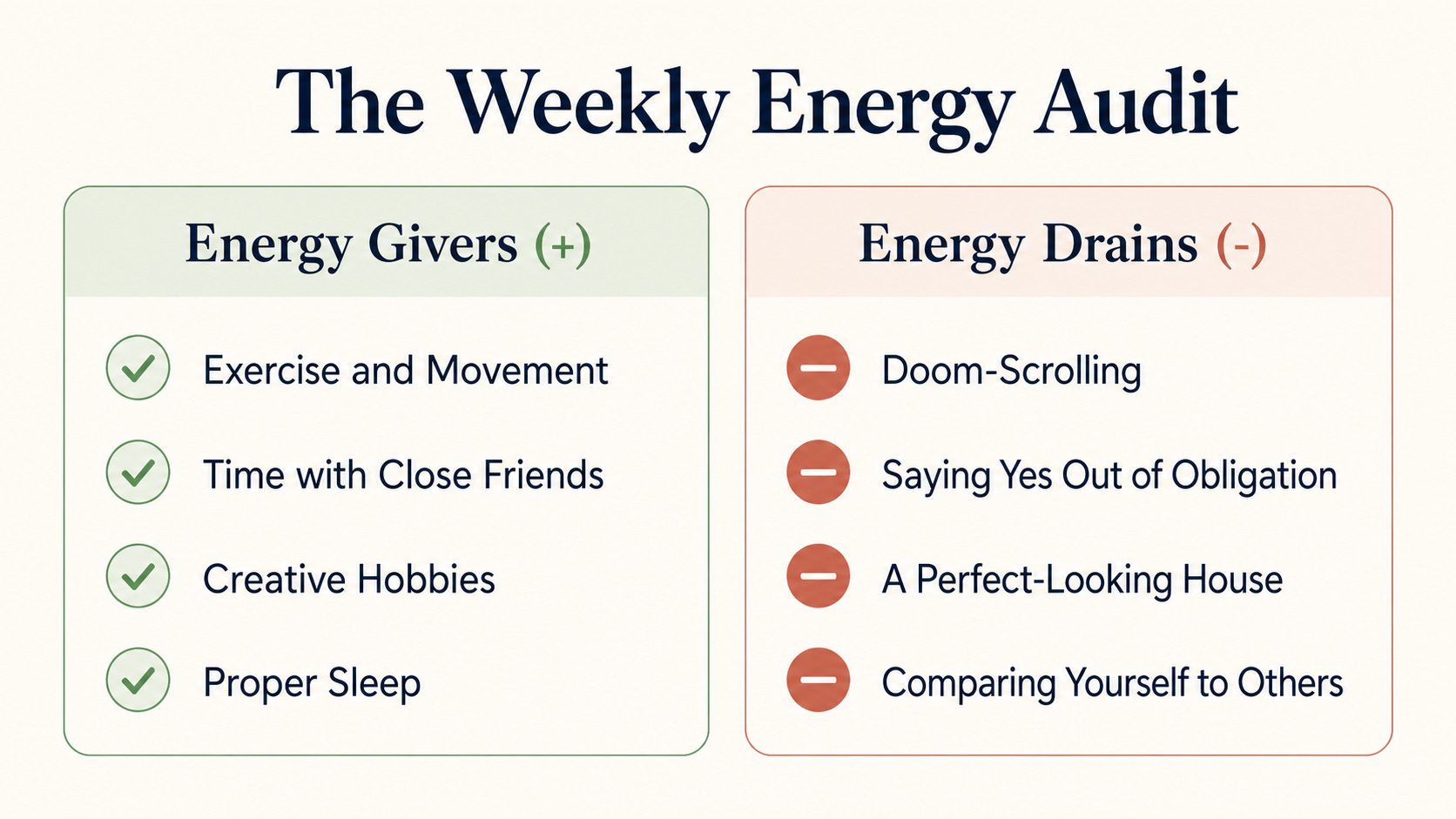
Not all commitments are created equal. Some things in your life give you energy; others drain it. The trick is knowing which is which.
Try this exercise:
List everything you do in a typical week — work tasks, household chores, social commitments, hobbies, screen time, everything.
Mark each item with a + (gives energy), - (drains energy), or = (neutral).
Look for patterns. Are there drains you can eliminate, delegate, or reduce? Are there energy-givers you’ve been neglecting?
Common drains for dads:
Doom-scrolling social media after the kids go to bed
Saying yes to things out of obligation rather than desire
Trying to keep the house Instagram-perfect
Comparing yourself to other dads (especially online)
Common energy-givers that get dropped first:
Exercise and movement
Time with close friends
Creative hobbies
Proper sleep
The goal isn’t to eliminate every drain — some things (like laundry) just need doing. But you might find that cutting one or two unnecessary drains frees up enough headroom to prevent that slide into burnout.
When Things Fall Apart Anyway
Let’s be real: even with the best systems in place, there’ll be weeks where it all goes sideways. The toddler gets a stomach bug. Work explodes. You haven’t slept properly in four days. The 30-minute recharge? Didn’t happen.
That’s okay. Burnout prevention isn’t about perfection — it’s about having a baseline you can return to.
When you’re in survival mode:
Lower the bar. This week, “good enough” is good enough. Beans on toast for dinner is fine. The house can be messy.
Ask for help. Call in favours. Ask grandparents, friends, or your partner to take the kids for an hour. This isn’t failing — it’s parenting.
Prioritise sleep above all else. When everything’s gone wrong, sleep is the single most effective recovery tool. Skip the late-night Netflix and go to bed.
Remember it’s temporary. Bad weeks end. The key is not to let a bad week become a bad month because you abandoned every boundary you’d set.
If you’ve been in survival mode for more than a few weeks, though, that’s worth paying attention to. Chronic burnout doesn’t resolve on its own. Speaking to your GP or a therapist isn’t a last resort — it’s a sensible, proactive step. There’s no trophy for pushing through when you’re drowning.
Start Small, Starting Now
You don’t need to overhaul your entire life to prevent burnout. Start with one or two of these:
Claim your 30 minutes tomorrow. Block it in your calendar right now. Decide what you’ll do with it.
Pick one boundary to set this week — a hard stop at work, turning off notifications after 8 PM, or saying no to one commitment.
Text one mate. Just check in. Ask how they’re doing. Build the habit.
Do the energy audit over the weekend. Ten minutes with a pen and paper — that’s all it takes.
Dad burnout is real, and it’s nothing to be ashamed of. The fact that you’re reading this means you care about being present for your family — and that’s exactly why looking after yourself matters. You can’t pour from an empty cup, as the saying goes. So fill yours up first.
If you found this helpful, you might also enjoy The 30-Minute Weekly Planning Session Every Busy Dad Needs — a practical guide to taking control of your week in just half an hour.
What’s your experience with dad burnout? Have you found strategies that work for you? I’d love to hear about it in the comments below.