
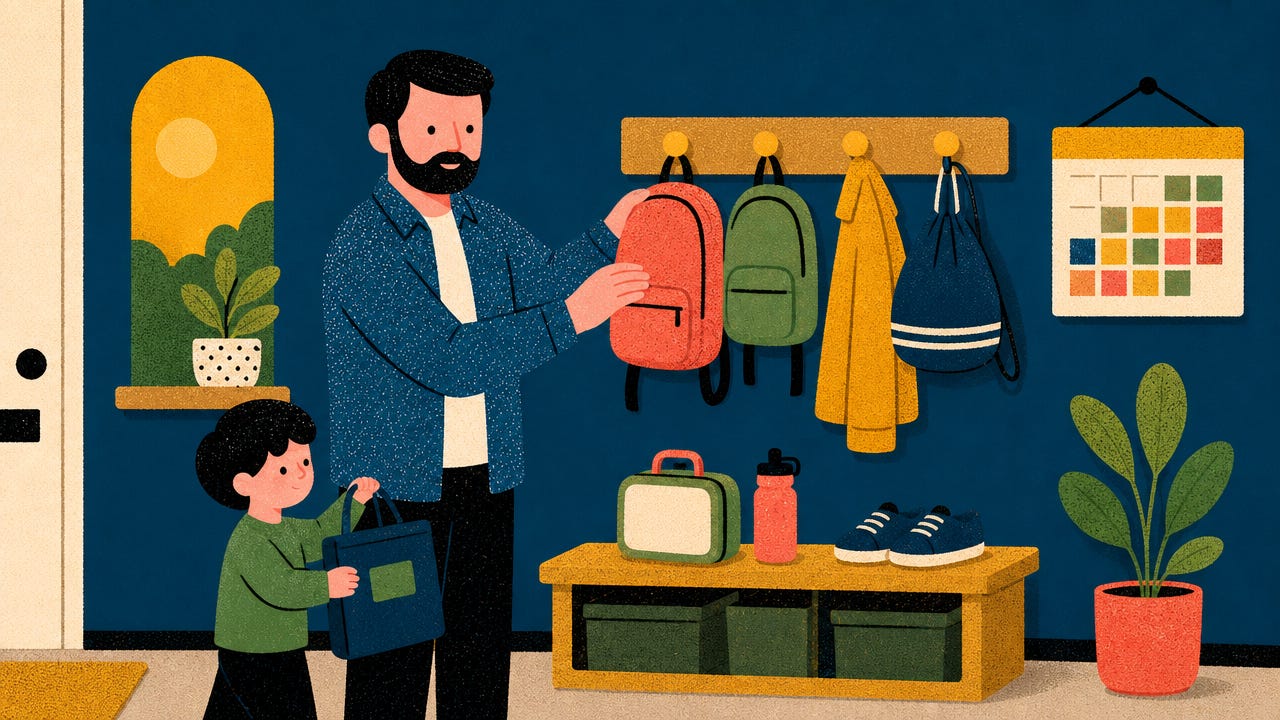
It’s Sunday evening. School starts tomorrow. You’re staring at a pile of new exercise books, a lunchbox you haven’t washed since July, and a PE kit that’s gone missing somewhere between the sofa cushions and the car boot. Your partner is reading out a list of non-negotiable school events for the next three weeks, and you’re nodding along while secretly wondering whether it’s too late to homeschool.
Back-to-school organisation for dads doesn’t have to feel like cramming for an exam you forgot about. The families that sail through September aren’t the ones running some military-grade spreadsheet operation — they’re the ones with a handful of simple systems that actually stick.
Here’s the thing most productivity advice gets wrong about the school-run season: it treats organisation as a one-off event. You do a big prep day, feel smug for 48 hours, then gradually slide back into chaos by week three. The real trick isn’t organising once — it’s building systems so lightweight that they run on autopilot.
Let me walk you through five that have genuinely worked for our family.
1. The Launch Pad: One Spot, Zero Excuses
This is the single highest-impact change you can make, and it costs nothing.
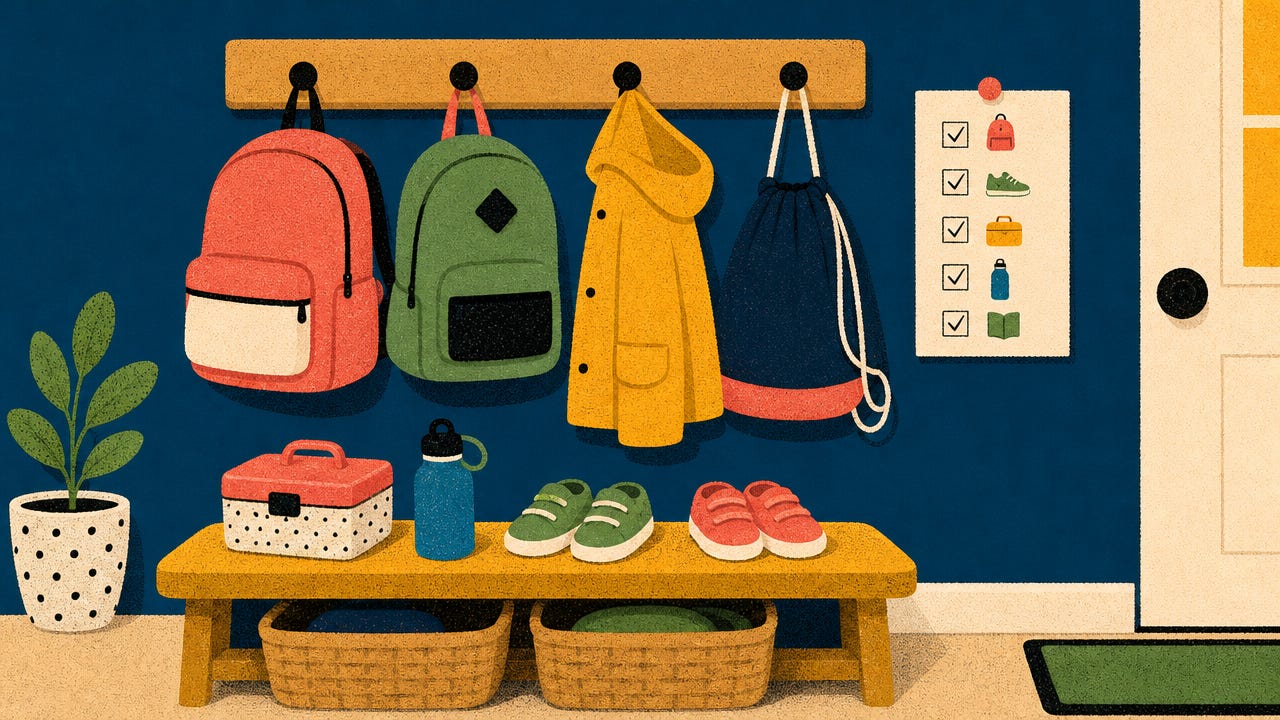
Pick one spot near your front door — a bench, a set of hooks, a shelf — and make it the launch pad. Every night, everything that needs to leave the house the next morning lands there: school bags, PE kits, packed lunches, permission slips, your own work bag.
The rules are simple:
If it needs to go out the door, it goes on the launch pad the night before.
Nothing else lives there. It’s not a dumping ground for post or car keys. It has one job.
Kids pack their own bags onto it. Even small ones can do this with a simple checklist stuck to the wall.
Why does this work? Because mornings with kids aren’t a time-management problem — they’re a decision-elimination problem. Every item you have to locate, remember, or negotiate about at 7:45 AM adds friction. The launch pad removes nearly all of it.
2. The Family Calendar: One Source of Truth
Here’s a pattern I see constantly: one parent has the school newsletter dates in their head, the other has the football fixtures on their phone, and nobody knows about the dentist appointment until it’s too late.
Family calendar management is genuinely one of the most underrated dad productivity systems. And it doesn’t require an app — though one helps. The principle is simple:
One calendar. Everything on it. Everyone can see it.
Here’s how to set it up:
Choose your medium. A wall calendar in the kitchen works brilliantly. A shared digital calendar (Google Calendar or Apple’s shared calendars) works if everyone actually checks it. Pick whichever your household will use, not whichever sounds more sophisticated.
Colour-code by person. Each family member gets a colour. When you glance at the week, you can instantly see who’s got what.
Do a weekly five-minute calendar review. Sunday evening or Monday morning — pick a consistent time. Scan the week ahead, flag clashes, and agree who’s handling what. This is where the magic happens.
Add the school calendar first. Before the term starts, sit down with the school newsletter and add every single date — inset days, parents’ evenings, non-uniform days, school trips. Do it once, properly, and you won’t get ambushed.
The weekly review is the key habit. Five minutes prevents five arguments.
3. The Night-Before Routine: Your Secret Weapon
I know, I know — you’ve heard “prepare the night before” a thousand times. But bear with me, because most people do this halfway and wonder why mornings are still chaotic.
A proper night-before routine isn’t just about packing bags. It’s a ten-minute family shutdown sequence that covers everything:
Bags packed and on the launch pad ✅
Clothes laid out (let kids choose from two options — enough autonomy to avoid a meltdown, not so much that you’re negotiating outfit choices at bedtime)
Lunchboxes prepped or at least planned (even deciding “it’s a ham sandwich day” removes a morning decision)
Permission slips signed and in the bag
Quick diary check — any special requirements for tomorrow? Is it World Book Day? Does someone need a costume made from three cereal boxes and a dream?
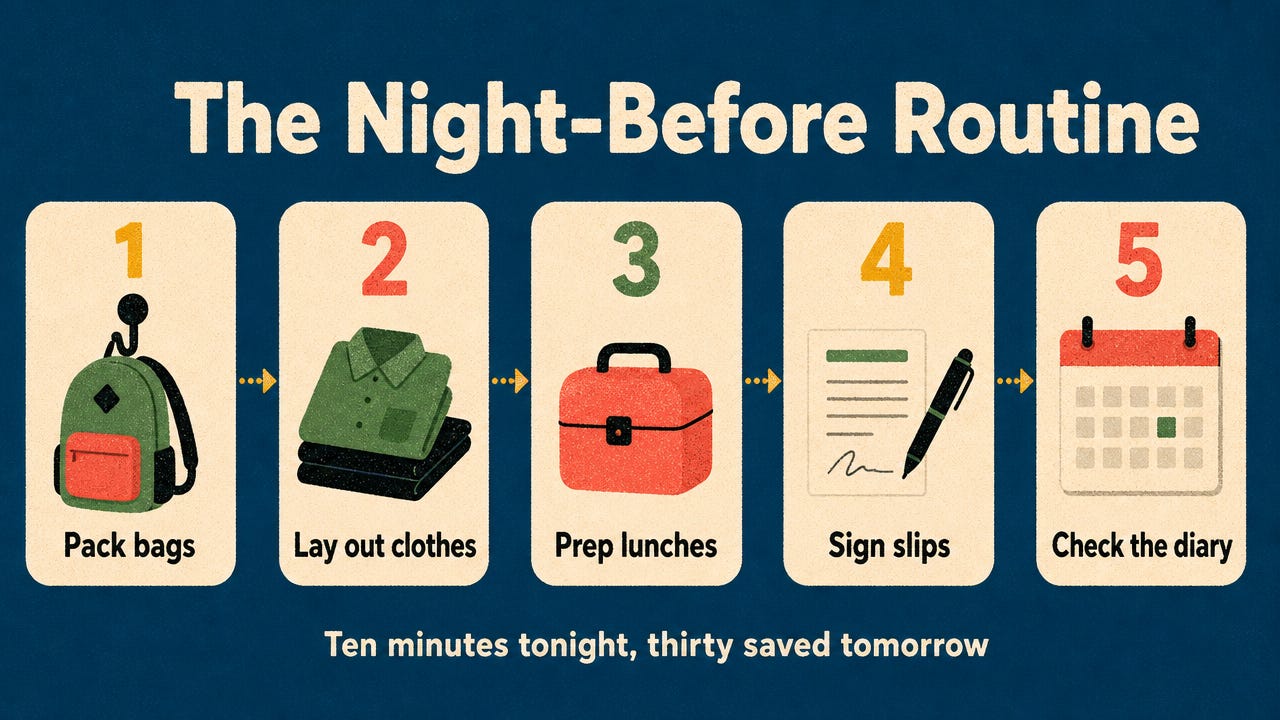
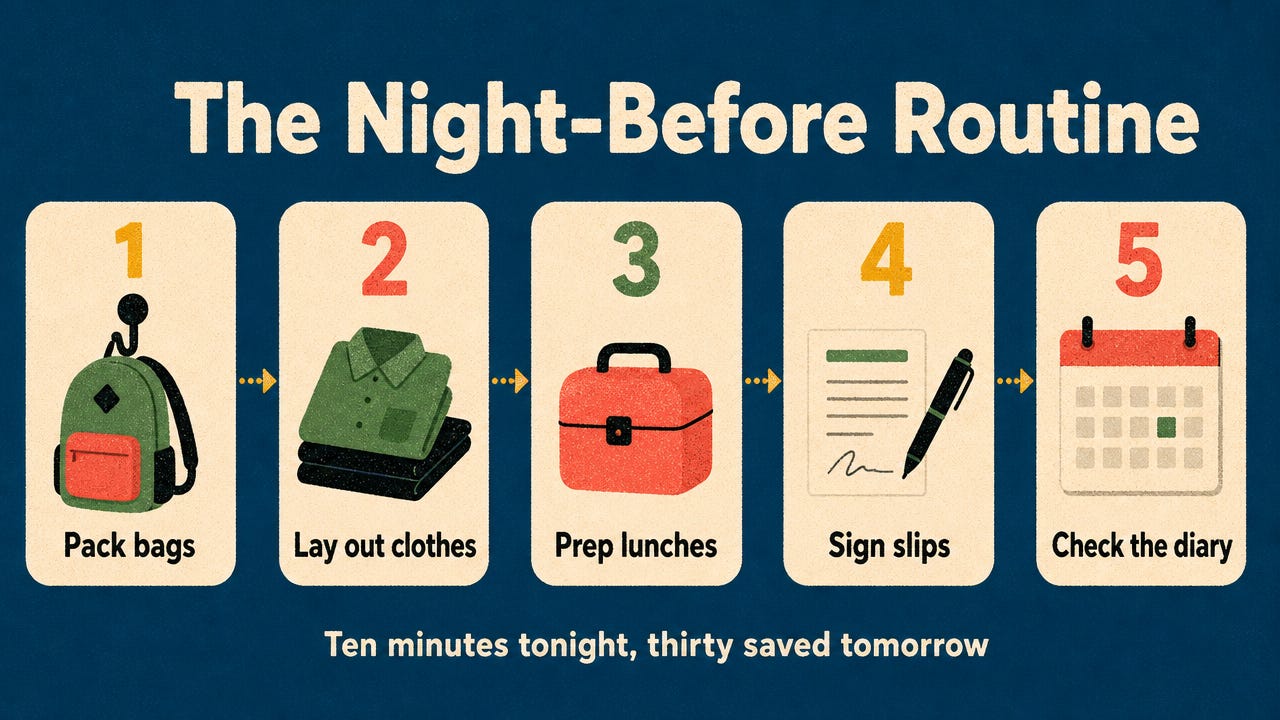
Here’s the part that makes it work: do it at the same time every night, and make it visible. We do ours right after the kids’ teeth are brushed. It takes ten minutes. It saves thirty minutes of morning panic.
The checklist itself lives on my phone, in Do Everything: it nudges me at 7:30pm, I tick off the five steps, and a fresh copy is waiting the next evening. A laminated list on the fridge does the same job, so pick whichever you'll actually look at.
And crucially — get the kids involved. Even a five-year-old can put their shoes by the door and their bag on the hook. The goal isn’t just organisation; it’s teaching them that being prepared is a normal part of life.
4. The Meal Prep Buffer: Stop Reinventing Lunch
School lunches are the silent time-sink of September. Every morning, you’re standing at the kitchen counter trying to create something nutritious, appealing, and not identical to yesterday’s effort — all while someone is shouting that they can’t find their reading book.
The fix isn’t elaborate meal prep. It’s a rotating lunch menu.
Here’s how it works:
Write down five lunches your kids will actually eat. Not what you wish they’d eat. What they’ll eat. Be honest.
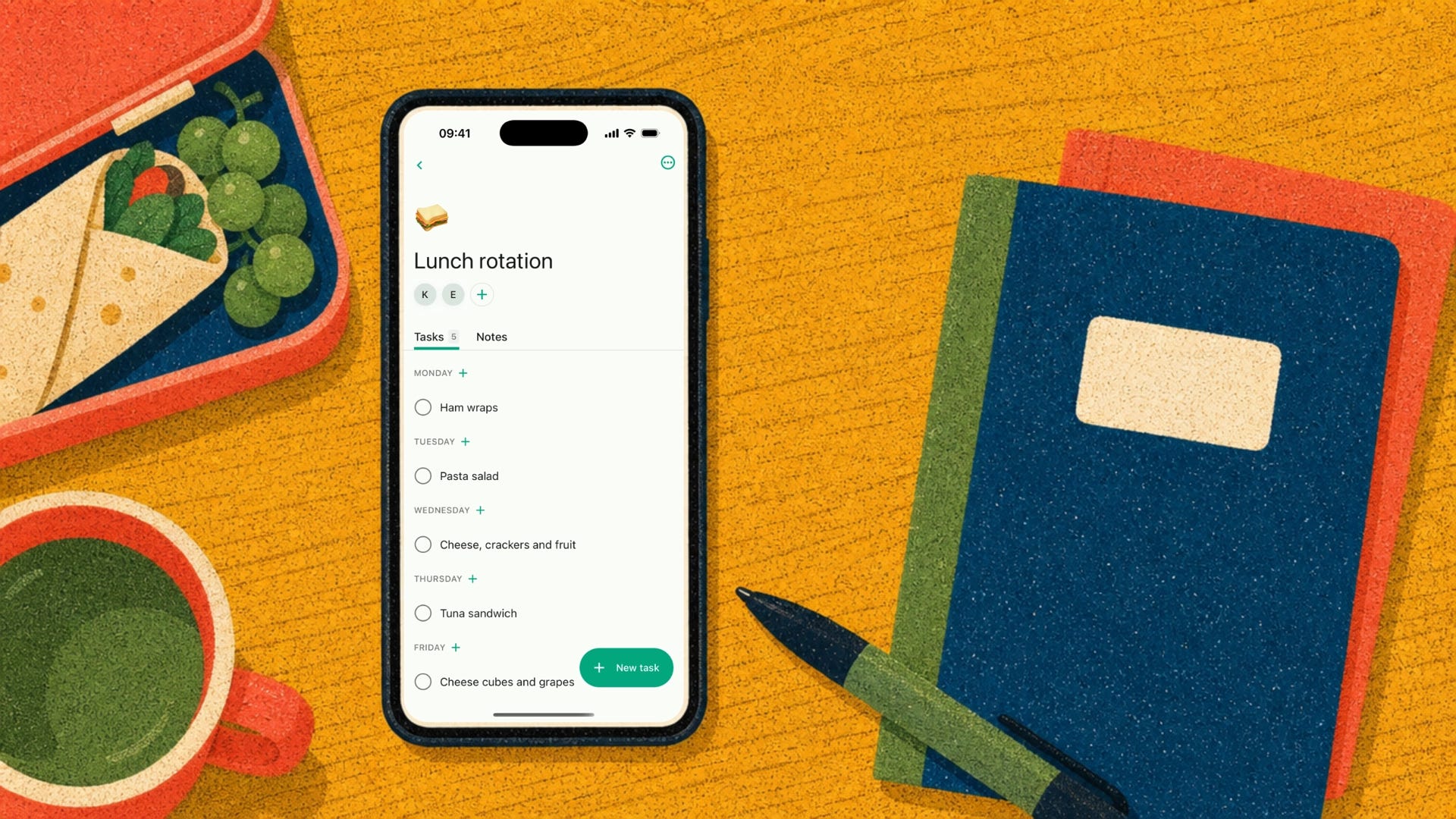
Assign one to each day of the week. Monday is always ham wraps. Tuesday is always pasta salad. Wednesday is cheese and crackers with fruit. And so on.
Do one shop at the weekend to cover all five. Buy in bulk where you can.
That’s it. No daily decisions. No creative pressure. Just a rotation that runs itself.
After a few weeks, you can swap items in and out to keep things fresh. But the structure stays. The best systems for organising family life are the boring, repeatable ones.
Some dads batch-prep on Sunday — making five sets of sandwiches or portioning snacks into containers. If that works for your schedule, brilliant. But even just having a fixed menu eliminates the biggest friction: deciding what to make.
Ours lives in a list my partner and I share in Do Everything, with a section for each day, so whoever's packing lunches (or standing in the supermarket on Saturday) has it on their phone.
5. The “One Bag” Rule for Paperwork
Schools produce an astonishing volume of paper. Letters, forms, event flyers, reading records, homework sheets — it’s relentless. And the default system in most homes is “the pile on the kitchen table,” which is really just organised chaos pretending to be a system.
Here’s a simpler approach:
One clear folder or envelope per child. Lives in a fixed spot (the launch pad works well).
When paper comes home, it goes straight into the folder. Not onto the table. Not into a pocket. Into the folder.
Once a week, during your calendar review, empty the folders. Action anything urgent, recycle the rest, and add any dates to the family calendar.
The discipline here is in the processing, not the filing. Paper only becomes a problem when it sits un-actioned. A weekly sweep keeps the backlog at zero.
If your school has gone digital — apps, portals, email newsletters — the same principle applies. Create a label or folder in your email for school correspondence. Process it weekly. Don’t let it pile up in your inbox alongside everything else.
When Things Fall Apart (Because They Will)
Let’s be honest: no system survives contact with a three-year-old who decides, at 7:52 AM, that today is the day they will only wear the Spider-Man costume. Or the morning when both kids are ill, the boiler’s broken, and you’ve got a 9 AM meeting you can’t move.
The point of these systems isn’t perfection — it’s a faster recovery.
When the launch pad is set up, a bad morning means grabbing the bags and going, even if everything else is chaos. When the calendar is shared, your partner can pick up the school run without a frantic phone call. When lunches are on rotation, you can assemble one on autopilot even when your brain is elsewhere.
Systems don’t prevent bad days. They make bad days shorter.
A few other reality checks:
The first two weeks are the hardest. You’re building new habits for the whole family. Give it time.
Kids will resist. Especially the older ones. Stay consistent — it gets easier.
You’ll forget things. Put a “rescue kit” in the car: a spare water bottle, a cereal bar, and a pen. Covers about 80% of emergencies.
Start Small: Your First Three Moves
You don’t need to implement all five systems at once. That’s a recipe for doing none of them properly. Instead, pick the one that addresses your biggest pain point and start there.
If I had to choose just three actions for this week:
Set up a launch pad tonight. Pick the spot, clear it, and tell the family the new rule.
Spend fifteen minutes adding the school calendar to your family calendar. Every date, every event.
Write down five school lunches on a sticky note and put it on the fridge.

That’s it. Three moves, maybe thirty minutes total, and your September will feel noticeably calmer.
Over to You
What’s your biggest back-to-school headache? Is it the mornings, the lunches, the endless paperwork — or something else entirely? I’d love to hear what systems work (or don’t) in your household. Drop a comment below and let’s share what we’ve figured out.
If you found this useful, you might also enjoy The 30-Minute Weekly Planning Session Every Busy Dad Needs — a simple framework for planning your week without it taking over your Sunday.